
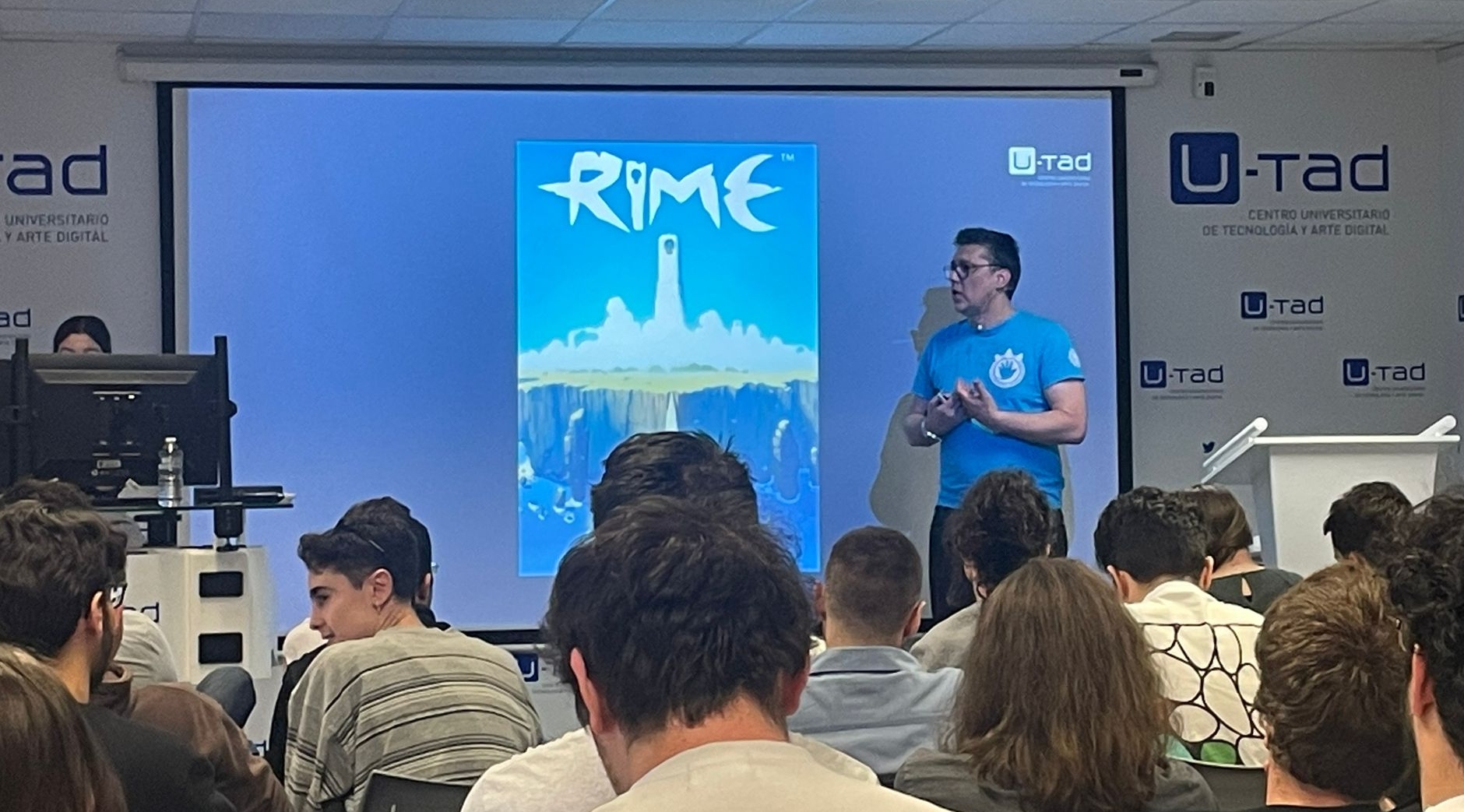
This past Wednesday, we had the great pleasure of attending the talk given by Michael Santorum at U-tad on “how video games tell stories.” He is a game developer and instructor who began his career in the industry as a designer on Commandos 2 and Commandos 3 (Pyro Studios, 2001–2003). Later in his career, he worked as Lead QA on Castlevania: Lords of Shadow (MercurySteam, 2010), where he interestingly met Kojima during a visit the Japanese developer made to the studio. In 2013, he joined the design team at Tequila Works, working on RiME and The Invisible Hours, which led him to his current role as Narrative Director. We also saw him on the stage of U-tad’s own Jugando en Casa gala, where, alongside José Raluy and Estefanía Salcedo, he received a recognition for the trajectory of the Madrid-based studio.

During the interactive and dynamic talk, Santorum posed a series of questions about the relationship between the designer and the player. Is the player truly in control of their decisions? We might say yes, but does the player actually control the story with their actions? This is where the role of the narrative designer comes in—whose task is to make the player feel that they are controlling the story, even if this is merely an illusion. This concept is known as player agency.
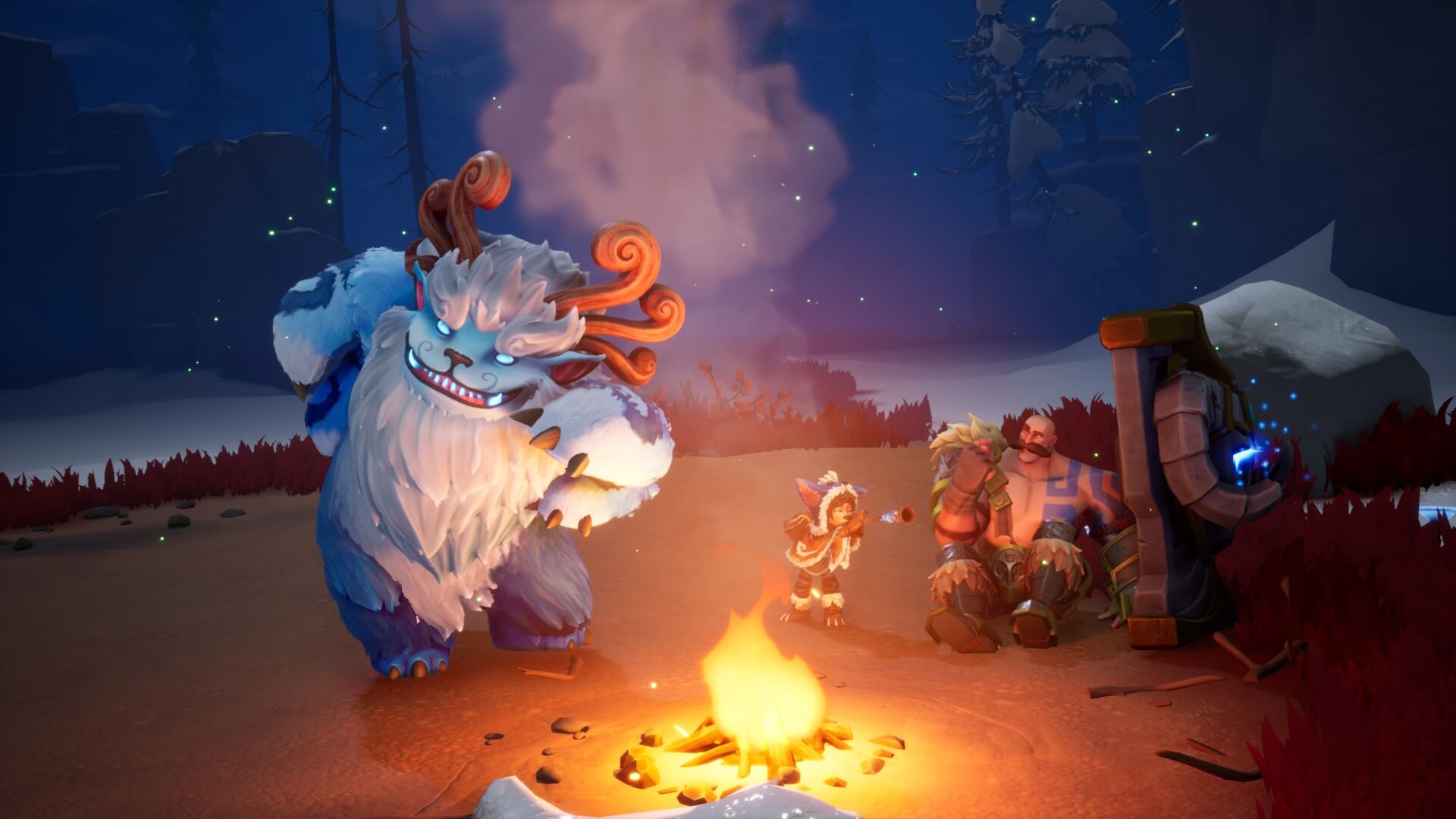
If there is something that defines Tequila Works, it is their emotional and impeccable narratives. Their latest release, Song of Nunu: A League of Legends Story, is no exception. Santorum explains that they had to conduct extensive research due to the vast lore of League of Legends. However, when reviewing the champions, they did not hesitate to choose a child whose best friend is a yeti. This allowed them to tell a story about friendship—an idea Riot Games quickly approved. Song of Nunu is not just a well-told story, and narrative designers are not the only ones who tell stories. Programmers, artists, and composers also contribute through their creations. Therefore, it is essential that the designer collaborates with and relies on the other departments to effectively and emotionally convey the intended feelings to the player.
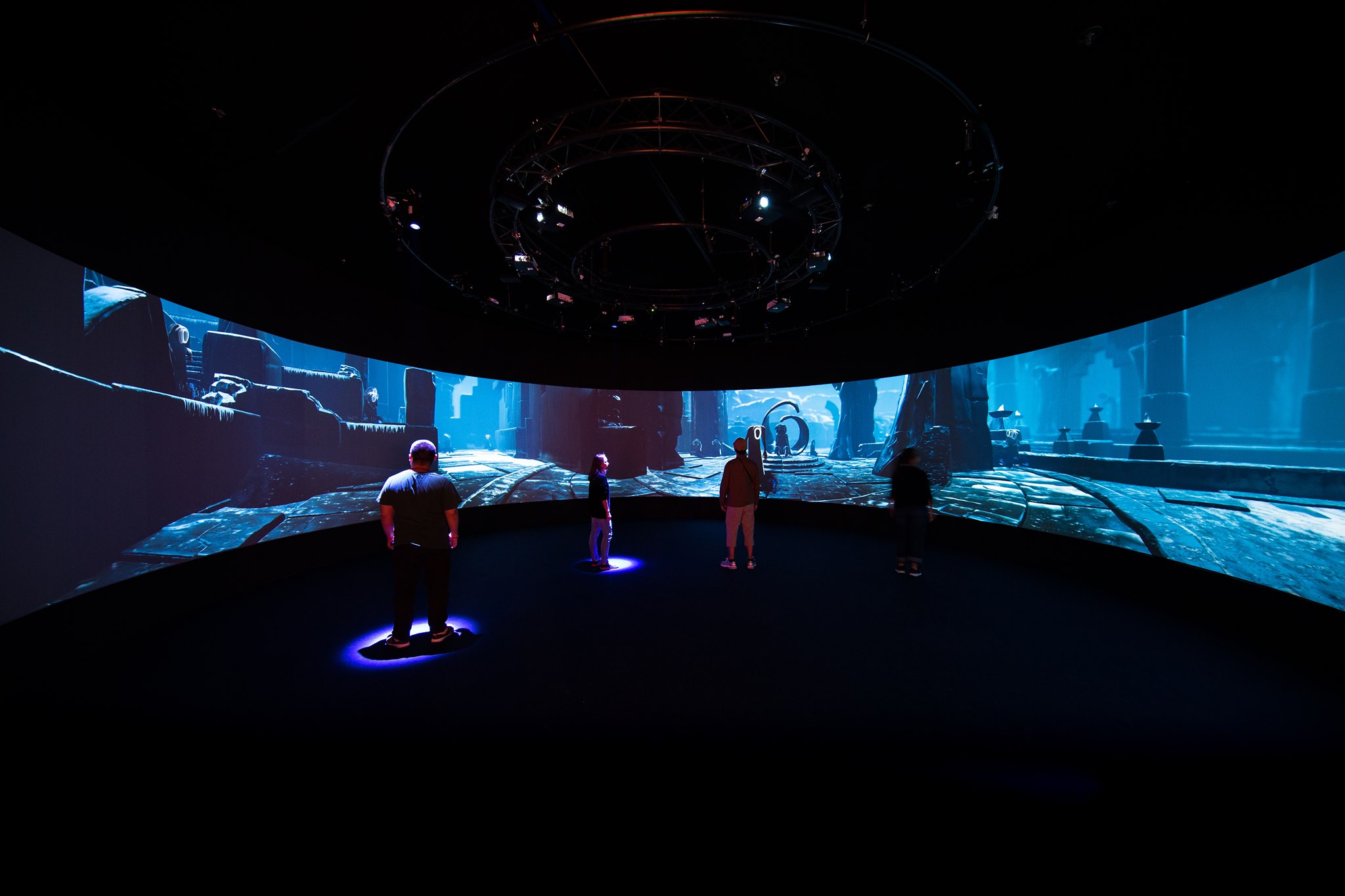
Pacing is a fundamental pillar in the design of any video game, as well as in narrative. It is important to balance gameplay moments with those that advance the story. RiME is divided into five chapters, each linked to a stage of grief. Between chapters, cutscenes are used to maintain cohesion and control pacing. Santorum shares a fun anecdote about how Dino Patti, creator of Limbo, described RiME at an event where he got to try it as “too much color”—an unsurprising observation given the aesthetic of his own games. If you enjoyed RiME, Tequila Works, in collaboration with Barbican Immersive, have created a sensory exhibition of the game. Although it has only been shown in Singapore so far, Santorum says they have it packed in a container ready to bring to Spain when conditions allow. The experience is called Book of Sand, and we hope to enjoy it soon.
Having the opportunity to listen to Michael Santorum up close has been an incredibly valuable experience. He left us with an important reflection: to create video games with unique value, we must bring a personal experience to the table. That is what defines us and sets us apart from the rest.
